
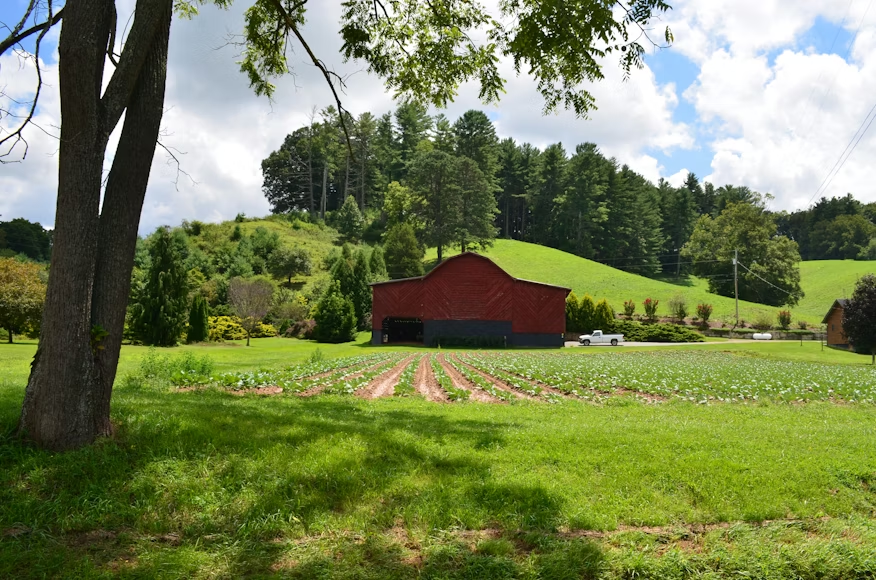
Are you looking to expand beyond your backyard garden?
Welcome to the crowd who is ready to graduate to full fledged land management. The trend used to be fairly slow and linear. But these days more and more people are jumping into managing more acres. In fact according to a survey roughly 40% of Homesteaders came into the lifestyle in the last three years.
That means there are a lot of new homesteaders just like you learning how to manage more land.
Luckily it doesn’t have to be stressful or complicated. You just need to know what you’re doing.
Below we cover everything you need to know about taking that next step.
You’ll learn
- Why Small Farming Is Booming
- The Equipment List You Need For More Acres
- How To Best Plan Your Land Layout
- Mistakes to Avoid When Starting A Homestead
Why Small Farming Is Booming
No need to take our word for it. The statistics are compelling:
There are currently over 2 million small family farms in the United States. That’s according to the USDA who defines a small farm as any family operation under $350,000 in gross sales.
Add another farm to that number. Yours.
Small scale homesteading and farming is more popular than ever.
There are many reasons but food security is a big one. Knowing where your food comes from matters to consumers. And…
Homesteading just feels good.
It’s rewarding to grow your own.
Your own mini homestead doesn’t need to consist of 100 acres. Homesteaders everywhere are squeezing plenty of productivity onto quarter acre lots. Some even less!
The key difference between the ones who get it and the ones who burn out?
They know enough to invest in the right equipment up front.
The Equipment You’ll Need For More Acres
Forget your shovel and rake. You’ll need some proper machinery to manage more acreage.
You knew that. Here’s the thing… Do you know where to find that equipment? Having access to quality Case IH and Kubota equipment in Bedford can mean the difference between a thriving farm and headaches.
Here’s the basic equipment list you’ll want:
Compact tractor
You’ll need a tractor. But you don’t need a farm-sized tractor. Something in the 25-50 horsepower range should be sufficient for most hobby farms.
Attachments and implements
Boxes, loaders, mowers, tillers. Think about the jobs you’ll need to do and research what equipment can help you do them.
Utility vehicle
Whether it’s an ATV, Side by Side, or similar vehicle you’d be surprised how much time these save you roaming your land.
Equipment storage
Don’t skimp on your garage or shed. Equipment lasts longer when protected from the elements.
When buying new equipment try to stick to trusted brands that are backed by dealers who will service your investments for decades to come.
Don’t buy junk either. Sure you can save money on equipment now but if it breaks down weekly you’ll lose money.
Keep everything maintained too. Regular servicing and tune ups keep equipment performing at peak levels.
How To Plan Your Land Layout
Resist the temptation to break ground until you have a good idea of what you want.
Thoughtful land layout makes your life easier. Bad layout causes you to work more than you have to. Here’s a trick I like to recommend to my customers.
Observe your property for one full year before making major changes.
Take note of:
- Water flow – where does it pool? Where are the dry areas?
- Sunlight – full sun? Partial?
- Wind – where does it hit your land the hardest?
- Traffic pattern – how do people and animals naturally move around the land?
Once you get a feel for how your land “works” you can begin design your layout.
Here’s a basic template for a productive mini homestead:
Everything you use daily or nearly every day should be closest to your house. If you’re hungry for breakfast and can’t get back to your garden in time it’s too far away. Further out you can place orchards, pasture, or other areas that require less frequent visitation.
Areas like poultry yards, pig pastures, and larger livestock should be as close to your house as practical. Once again I cannot stress this one enough.
Bonus tip: Leave room to expand. You think you need 5 acres? Wait a few years you’ll wish you had double that.
When laying out your property ask yourself… Can I combine trips? That’s the name of the game.
Mistakes to Avoid When Starting A Homestead
We talk to a lot of beginners at our dealerships. Here’s the 5 most common mistakes we see.
Determined by frequency.
1. Taking on too much too fast
Hand down homestead killer. Buy 20 acres and try to clear half of it and build barns in year one.
You’ll hate yourself by August.
Take small chunks and expand as you develop them. Remember you don’t have to do everything at once.
2. Not testing your soil
Vegetable garden? Pasture? Fruit trees? They all need the right soil.
Know what your soil needs before you plant.
Most county extension offices will test your soil for cheap or even free.
3. Not planning for water management
Too much? Not enough? Water problems are expensive problems.
Know where water moves around your property. Manage it now instead of when you have buildings stuck in the mud.
4. Buying equipment you don’t need yet
This tractor looks cool! But do you need a tractor? Will you actually use that baler? Stick to basics and build your equipment list from there.
5. Trying To Learn it All Yourself
Hey you’re reading this. So you aren’t alone on this one.
There are tons of resources to learn everything about homesteading. Read books, ask your local equipment dealer, and seek out others who live the lifestyle.
Wrapping Up
Graduating from a simple backyard plot to a productive little homestead is an exciting time. Just remember it’s not a race.
Take your time, invest in your land, and learn as you grow.
To recap:
- Small scale farming continues to grow every year
- You need proper equipment to make things easier
- Spend time planning your land usage
- Avoid making these 5 common mistakes
- Learn from those who’ve done it before
Once you jump into serious land management you’ll wonder why you waited so long.