
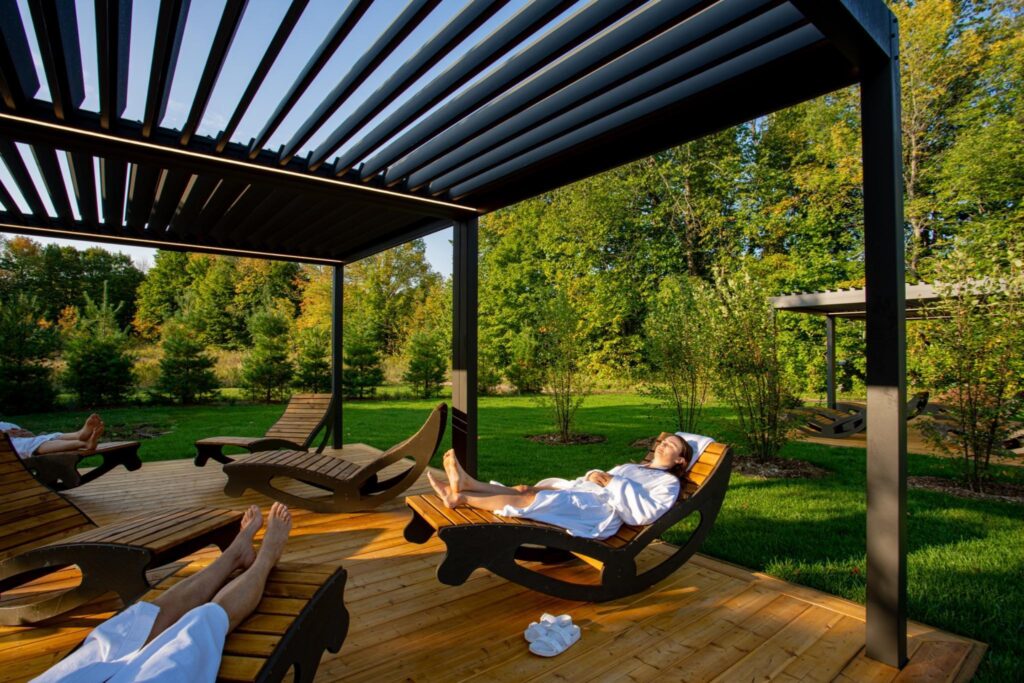
A greener backyard is not defined only by its planting scheme. The materials beneath and above the seating area also have a life beyond the day they are installed. A metal pergola can form part of a durable outdoor room when its construction, maintenance and eventual recovery are considered together. The environmental question is not whether one material sounds sustainable, but whether the whole design avoids unnecessary replacement.
Sustainable Outdoor Design Begins with Longevity
A structure that remains useful has a better chance of justifying the resources invested in it. Durability includes resistance to exposure, but it also depends on whether the size, location and appearance continue to suit the household. A technically sound frame may still be removed if it blocks a valued view or creates a patio nobody wants to use. Longevity therefore begins with the brief as well as the specification.
Keeping sound existing paving, furniture or planting can reduce the scope of a project. The same principle applies to repairs: replacing a serviceable assembly because one small part has failed creates avoidable material demand. Access to components and clear product identification make future maintenance more feasible. A design that can be understood and repaired is often more useful than one whose clean appearance conceals permanently inaccessible parts.
Temporary Outdoor Products Can Create Hidden Waste
Fabric shades and lightweight gazebos have legitimate uses, including rented homes and occasional gatherings. Their environmental disadvantage appears when a short-lived product repeatedly replaces another in a location that needs permanent cover. The issue is the replacement pattern, not the assumption that every temporary item is wasteful or every permanent structure is responsible.
A realistic comparison follows the products through several seasons. The less visible material demands deserve a place alongside the original purchase:
- Worn covers may require replacement even while the supporting frame remains usable.
- Damaged connections can make a low-cost assembly difficult to repair if individual parts are unavailable.
- Repeated surface treatments consume materials and require preparation, cleaning and disposal.
- Seasonal dismantling can shorten service life when components are repeatedly lost or bent.
- A new layout may make the previous product redundant before its materials have worn out.
These possibilities do not establish a universal lifespan. They identify questions for the actual alternatives under consideration. A well-maintained timber structure, for example, may provide many years of service, while a poorly detailed metal one may disappoint early. Product design and care matter alongside the material category.
Why a Metal Structure Can Reduce Maintenance Cycles
Metal framing can offer consistent geometry and avoid some routine refinishing associated with other exposed materials. Its suitability depends on the alloy, protective finish, connection details and local environment. Coastal salt, trapped moisture and incompatible metals introduce different demands from a sheltered inland garden. Low maintenance should describe a manageable routine, not the absence of one.
Drainage details are especially important because water does not stop affecting a structure once rain ends. Channels need accessible cleaning points, and surrounding surfaces should not hold moisture against vulnerable interfaces. Inspecting damage early can prevent a small finish defect or blocked outlet from becoming a larger problem. Those modest tasks help preserve the value of a durable frame.
Design the Structure Around Plants, Not Against Them
The planting plan should respond to the actual shade and water conditions created by the roof. A covered edge may become drier while an outlet concentrates rain elsewhere, changing what can thrive in each location:
- Shade-tolerant planting can occupy areas that lose direct sun during the main growing season.
- Movable planters offer flexibility without requiring unnecessary excavation near established roots.
- Separate supports can carry climbing plants without obstructing moving louvers or drainage channels.
- Roof runoff should follow a planned route that avoids waterlogging sensitive beds.
- Open views and existing greenery can remain part of the room instead of being screened away automatically.
The size of mature plants matters more than their appearance on installation day. Leaves, stems and access for pruning need room around the structure. Where significant roots or established trees are involved, landscape and arboricultural advice can prevent a supposedly green upgrade from damaging the features that already give the garden its character.